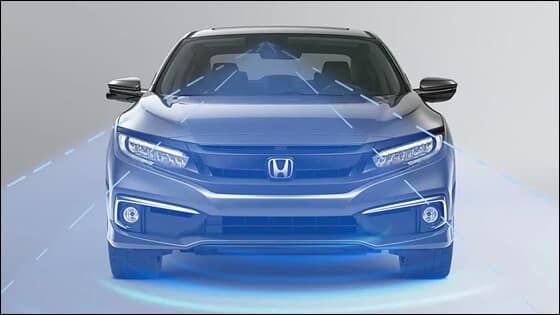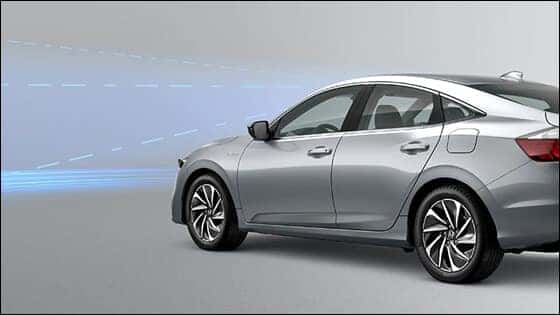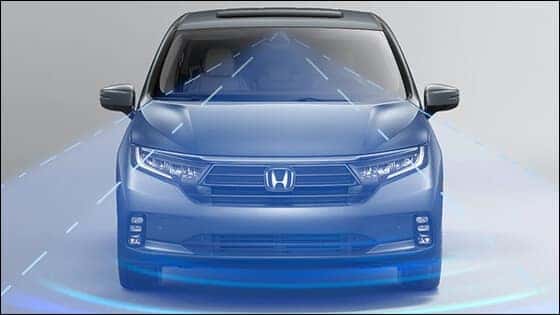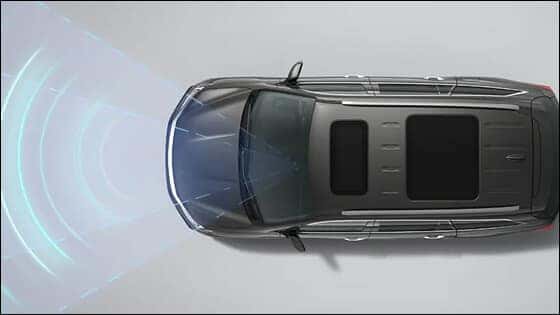


The Honda Lane Keeping Assist System (LKAS) is a safety feature included with the Honda Sensing® suite of driver-assist technologies. LKAS is designed to make driving more convenient by helping to keep your vehicle in the middle of a detected lane lines, and provides alerts and steering adjustments if the vehicle is detected drifting out of its lane. Honda is known for building some of the most advanced safety systems, and the Lane Keep Assist feature is no exception.
LKAS is meant to improve long, highway drives when your vehicle has a tendency to drift out of its intended lane. The system uses a windshield-mounted camera that detects the lane markings on a highway, while the Electric Power Steering (EPS) will help guide your vehicle to the middle of a detected lane by providing you with a lane departure warning. If LKAS senses your vehicle is drifting out of its lane you will receive a visual alert on the instrument panel and subtle steering correction.
LKAS generally operates on its own, but if the system needs to be activated for any reason follow the steps below:
The vehicle must be traveling at 45 to 90 miles per hour and your hand(s) must be on the steering wheel for LKAS to operate.
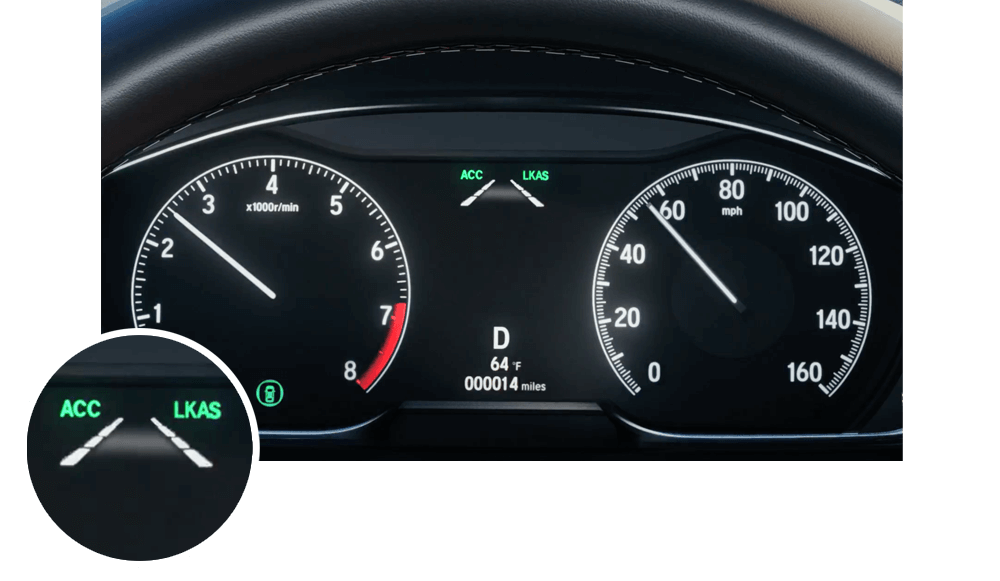

All 2026 Accord trims come standard with Lane Keeping Assist as part of Honda Sensing.
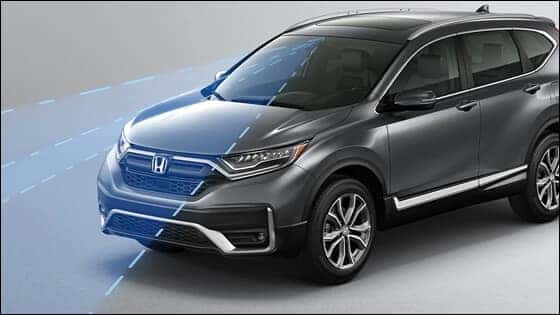
From LX to Touring, every 2026 CR-V (including CR-V Hybrid) has standard LKAS.
LKAS is a wonderful piece of driver-assist technology that is very helpful on long stretches of highway where your mind and vehicle tend to drift. If you would like to see the benefits of Honda Sensing and LKAS stop into Vern Eide Honda in Sioux Falls to test drive your favorite Honda model.
Honda Lane Keeping Assist provides gentle steering input to help guide the vehicle, though the driver remains fully responsible at all times. Your hands must stay on the wheel for the system to remain active.
LKAS is designed for highway driving and works best on roads with clear lane markings and steady speeds. It is not intended for stop-and-go traffic or tight city streets.
If the camera cannot clearly read lane lines, LKAS may temporarily pause or disengage. A dashboard alert lets the driver know when the system is unavailable.
Construction zones often use irregular or temporary markings, which can limit LKAS functionality. Drivers should expect reduced assistance and rely on manual steering in these areas.
LKAS can operate at night if lane markings are visible to the camera. Fog, heavy rain, or glare can reduce detection accuracy and may cause the system to disengage.